How Can a Small Business in India Realistically Improve Its Google Business Profile and Local Search Presence?
Published 2026-10-03 · RS-Techie
The Foundation: Optimising Your Google Business Profile
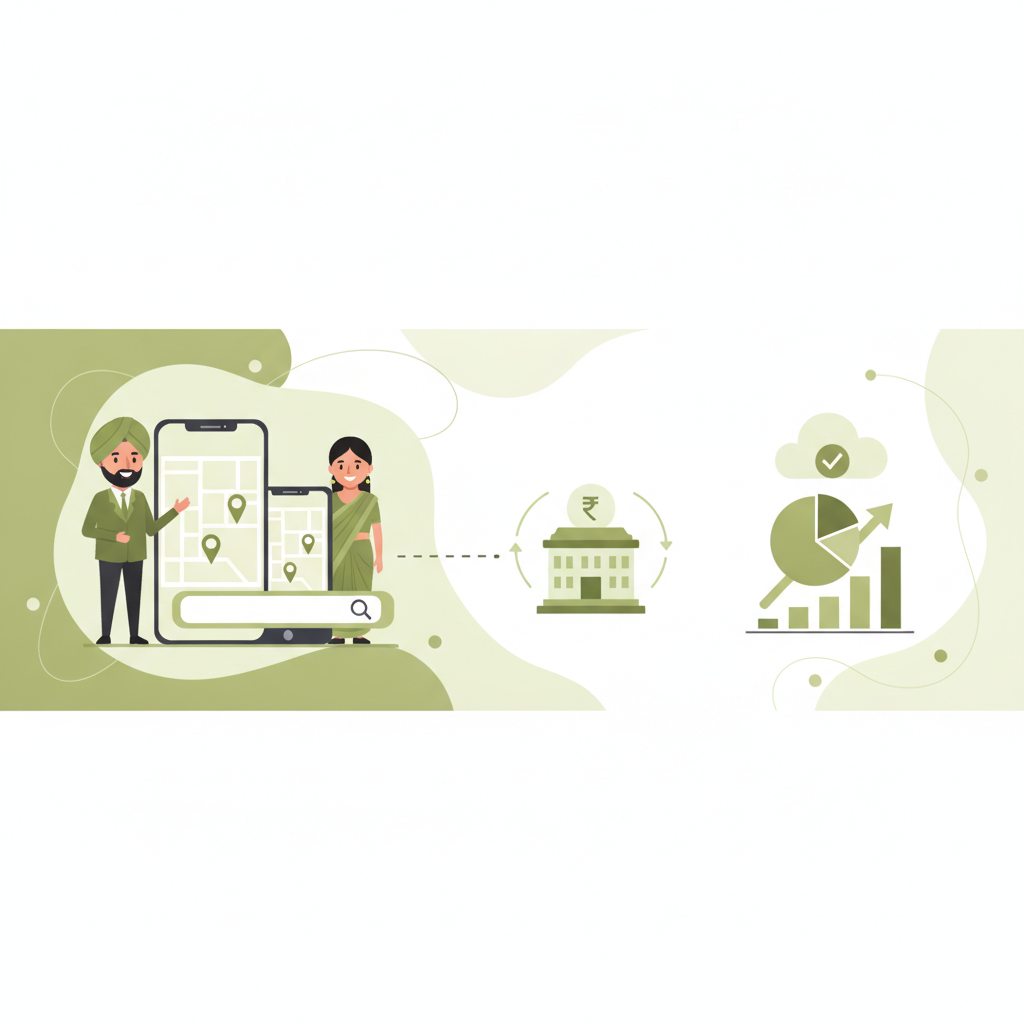
Google Business Profile (GBP), formerly known as Google My Business, is a free tool that allows Indian businesses to manage how they appear on Google Search and Maps, acting as their digital storefront. For local businesses in India, GBP optimization should be the first and highest-priority SEO investment, as it is critical for local search, capturing 40-60% of all clicks on local search results pages. Furthermore, 92% of Indian consumers use Google to find local businesses, highlighting its immense importance. To effectively optimize your GBP, begin by claiming and verifying your profile, which Google typically offers via postcard, phone, email, or video confirmation. Ensure your business's Name, Address, and Phone number (NAP) are 100% consistent across all online platforms, as this consistency is a key signal for Google. Crucially, choose the most specific business categories available; for instance, select "South Indian Restaurant" instead of just "Restaurant" to better match relevant searches. Populate your business description with relevant keywords naturally, highlighting what you offer, what sets you apart, and your location. Visual content plays a significant role in engagement. Upload high-quality, real photos and videos of your storefront, interior, products, services, and team. Google's research indicates that businesses with more than 100 photos receive 520% more calls than those with just 10, presenting an easy competitive advantage in India where many businesses upload fewer than 20 photos. Avoid stock images and focus on localized visuals. Regularly update your profile with services, products, accurate operating hours (including holiday adjustments), and business attributes like "delivery" or "dine-in". Finally, make consistent use of Google Posts to share news, events, offers, and promotions. Active profiles that maintain regular updates signal to Google and users that your business is dynamic and attentive, which Google's AI detects and boosts in search rankings.
Generating and Managing Customer Reviews
Customer reviews are the second most important ranking factor for local search after relevance and significantly influence customer trust and conversion rates. A substantial 97% of consumers read reviews before choosing a local business, and 68% will only use a business rated four stars or higher. To ethically generate more Google reviews, the safest approach is to ask genuine customers for honest feedback, ideally immediately after they've had a positive experience. Reduce friction by creating a direct Google review link from your Google Business Profile (under 'Get more reviews') and shortening it. Convert this link into a QR code that can be prominently displayed at your checkout counter, on receipts, or in your office, allowing customers to scan and leave feedback instantly. Given WhatsApp's widespread use in India, sending a short, polite follow-up message with the review link a few hours after service can also be highly effective. Additionally, consider adding the review link to your email signature and training your customer-facing staff to confidently ask for reviews. Managing reviews is equally crucial. Respond to every review, both positive and negative, professionally, politely, and promptly to show customers their feedback is valued. Personalize your replies by addressing the reviewer by name and acknowledging specific details of their experience. For negative reviews, offer a genuine apology when appropriate and explain any mitigating circumstances, as this can help rebuild trust. Crucially, avoid unethical practices such as buying reviews, offering incentives solely for positive ratings, using review gating (filtering out unhappy customers), or creating fake accounts, as these can lead to penalties or profile suspension.
Leveraging Local SEO Beyond GBP
Beyond an optimized Google Business Profile, a strong local search presence for Indian businesses requires consistent Name, Address, and Phone (NAP) information across the web, strategic local citations, and a mobile-friendly website optimized with local keywords. Ensure your NAP details are identical across all online platforms, including your website, social media, and online directories, as this consistency builds trust with Google and improves local ranking. Building local citations is also vital; list your business on popular Indian directories such as JustDial, Sulekha, and IndiaMART. For your website, a mobile-first approach is paramount, given that over 850 million internet users in India primarily access the internet via smartphones. Optimize your website with location-specific keywords (e.g., "best biryani joint in Hyderabad" or "dentist in Pune") in your content, meta descriptions, and headers. If your business serves multiple areas, consider creating dedicated location-specific landing pages. Implement local schema markup on your website to provide structured data that helps Google better understand your business's local relevance. With the rising adoption of voice assistants in India, optimize your content for voice search by using conversational, question-based phrases like "find a dentist near me." Building high-quality local backlinks from regional blogs, community websites, and partnerships with local organizations further enhances your online authority. Utilize free SEO tools like Google Search Console to monitor performance, Google Keyword Planner and Google Trends for keyword research, and Google Analytics 4 to track user behavior, all of which are essential for a robust local SEO strategy.
Engaging Customers with Modern Communication
Leveraging platforms like WhatsApp Business API for customer communication is a modern and effective strategy for Indian small businesses to enhance engagement, automate interactions, and build trust in local search. India is WhatsApp's largest market globally, with over 500 million active users, making it an indispensable channel for customer engagement. Unlike the basic WhatsApp Business App, the WhatsApp Business API is designed for businesses needing to communicate at scale, offering full automation, CRM integration, and multi-agent access. This allows small businesses to send verified business messages, automate order updates, delivery alerts, and handle customer queries efficiently through chatbots, which can significantly reduce response times by up to 80%. The benefits for SMBs include instant reach with over 90% open rates on messages, improved customer engagement, automation for routine tasks like appointment reminders, and enhanced trust through verified business profiles. These features are often more cost-effective than traditional advertising or call centers. RS-Techie offers Leporis, a WhatsApp automation platform designed for Indian businesses to streamline customer interactions, automate responses, and manage leads effectively. Several providers in India facilitate WhatsApp Business API access, with platforms like ChatFlow by Novynix offering plans starting from ₹999/month for AI-first automation, and Mtalkz providing starter packages around ₹5750/month for 50,000 messages. Other notable providers include Wati, AiSensy, Interakt, and Gallabox, each with varying features and pricing structures tailored to different business needs.
Frequently Asked Questions
How often should I update my Google Business Profile?
You should update your Google Business Profile regularly, ideally with fresh content weekly or monthly, to signal to Google that your business is active and attentive. This includes posting updates, offers, new photos of your business, products, or team, and adjusting business hours for holidays or special events. Google's AI detects profile completeness and prioritizes active profiles with regular updates, posts, Q&A responses, and photos, which can boost your visibility in local search results.
Are paid Google Ads necessary for local search?
No, paid Google Ads are not strictly necessary for local search visibility, as a dominant local presence relies heavily on organic consistency and optimization rather than ad spend. While Google Ads can provide immediate visibility, a well-optimized Google Business Profile and a robust local SEO strategy can help small businesses outrank larger competitors organically in their specific geographic territory. Local SEO focuses on attracting high-intent customers who are actively searching for nearby services, and appearing prominently in the local 3-pack or Google Maps is often achieved through organic efforts based on relevance, proximity, and prominence.
What's the best way to respond to negative reviews?
The best way to respond to negative reviews is professionally, politely, and empathetically, demonstrating that you understand the customer's feelings and are committed to high-quality service. Respond promptly, ideally within 48 hours, address the reviewer by name, and acknowledge their specific feedback. Offer an explanation or a genuine apology when appropriate, as this can go a long way in rebuilding trust. This approach not only helps in potentially resolving the issue with the dissatisfied customer but also signals to potential customers and Google that your business values feedback and actively engages with its audience, which can positively impact your overall reputation and prominence.