What's New in Embedded Systems and IoT That Matters for Indian Business Automation?
Published 2026-09-29 · RS-Techie
The Rise of Edge AI and Smart Sensors for Real-time Insights
The most significant advancement in embedded systems and IoT for business automation is the proliferation of Edge AI, which brings artificial intelligence processing directly to devices, enabling real-time insights without constant cloud connectivity. Edge AI, also known as AIoT, allows devices like smart cameras and industrial sensors to process data locally, leading to ultra-low latency, reduced bandwidth costs, and enhanced data privacy by keeping sensitive information on-device. This is particularly beneficial for Indian Micro, Small, and Medium Enterprises (MSMEs), as it unlocks improvements in quality control, machine maintenance, compliance management, and energy efficiency, overcoming productivity constraints often faced by smaller businesses. For instance, an Edge AI-enabled camera can instantly detect defects on a production line, flagging inconsistencies immediately and reducing scrap and rework, which is much faster than sending data to a remote server for processing.
Advanced Connectivity: 5G and LPWAN Democratize IoT
Advanced connectivity technologies like 5G and Low-Power Wide-Area Networks (LPWAN) are making IoT solutions more accessible and cost-effective for Indian small and medium businesses. 5G offers high-speed, ultra-low-latency connectivity essential for real-time data transmission, seamlessly integrating technologies like automation, AI, and robotics in manufacturing. This translates to improved operational effectiveness and reduced downtime. Complementing 5G, LPWAN technologies such as NB-IoT and LTE-M provide inexpensive, energy-efficient connectivity for devices that transmit small amounts of data over wide areas. This is ideal for remote deployments in sectors like agriculture, logistics, and small-scale manufacturing, allowing farmers to deploy affordable soil sensors or logistics companies to track shipments with low-cost, battery-powered devices without heavy infrastructure investment.
Predictive Maintenance and Enhanced Operational Efficiency
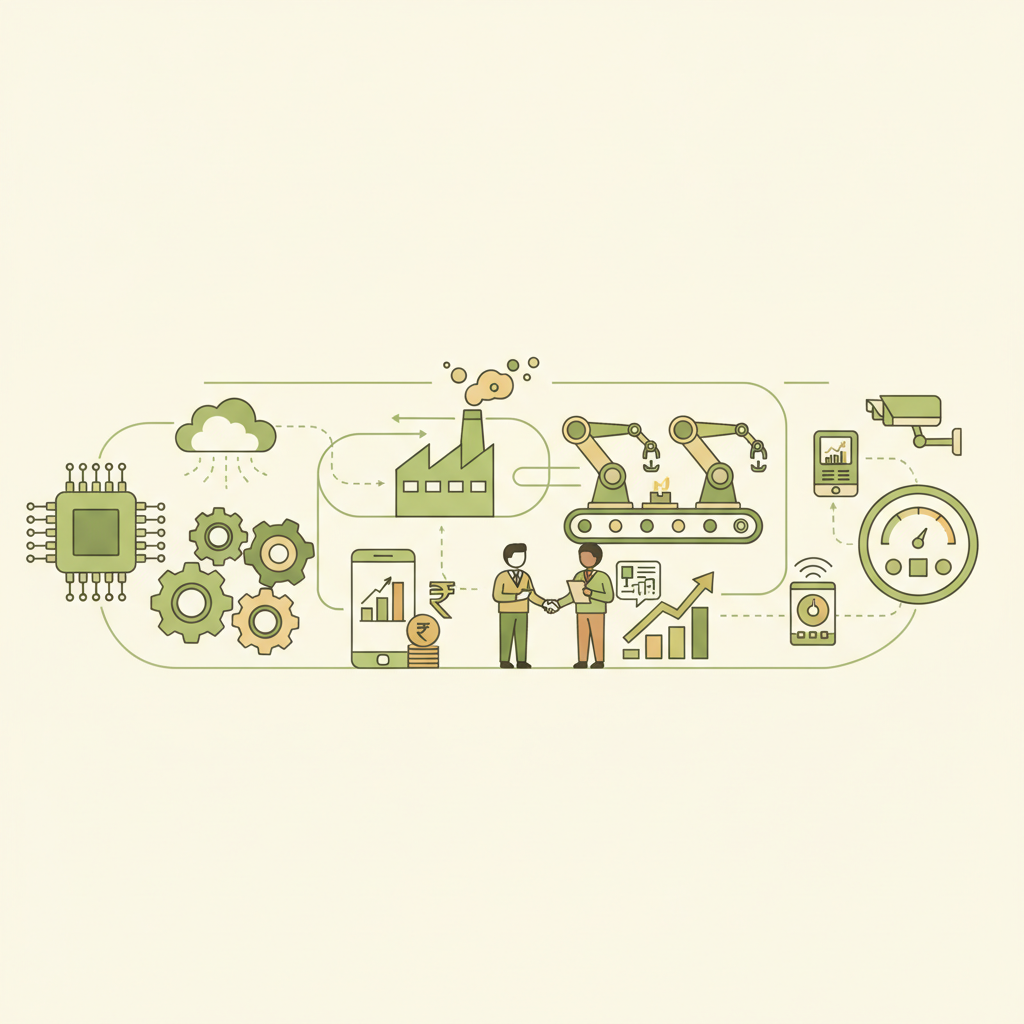
New embedded systems and IoT applications are fundamentally transforming operational efficiency through predictive maintenance and real-time monitoring, significantly reducing unplanned downtime and maintenance costs. Predictive maintenance uses AI, machine learning, and industrial IoT sensors to continuously monitor equipment health and forecast failures based on actual data, rather than relying on fixed schedules. In Indian manufacturing, where unplanned downtime can cost lakhs per hour, this approach can reduce unplanned downtime by 30-50% and lower maintenance costs by 20%, with an average payback period of 6-14 months for the IoT investment. Beyond maintenance, IoT solutions enable real-time tracking of assets, optimization of supply chains, and automation of factory and warehouse processes, providing deep insights into performance and reducing operational costs across various industries.
Strengthening Security and Addressing Data Privacy Concerns
Enhanced hardware security and improved data privacy measures are critical new developments in embedded systems and IoT, addressing previous vulnerabilities that concerned businesses. Historically, many IoT devices were not designed with security in mind, making them susceptible to cyberattacks, with 68% of IoT attacks originating from insecure firmware. The latest trends emphasize 'secure by design' principles, incorporating hardware-level security techniques like secure boot, encrypted processors, and tamper-resistant PCB designs to protect devices from hacking. Edge AI also plays a role in privacy by processing sensitive data locally on-device, reducing the need for continuous external sharing. Despite these advancements, challenges remain, including resource constraints in embedded systems that limit sophisticated security protocols, the integration of new technologies with legacy systems, and a shortage of skilled cybersecurity professionals in India.
Affordable Entry Points and Compelling ROI for Indian Businesses
The cost of implementing embedded systems and IoT for business automation in India has become increasingly accessible, offering compelling returns on investment for small and medium businesses. Basic single-machine IoT monitoring can start from approximately ₹50,000 for 1-3 machines, including sensors and a basic cloud dashboard, serving as an affordable proof-of-concept. For small deployments, monthly cloud costs can be as low as ₹2,000–₹5,000. A full smart factory IoT setup for Indian SMEs (10–50 machines) typically costs between ₹5 lakh and ₹15 lakh, covering hardware, software, installation, and initial hosting. The average payback period for IoT investments in India is typically 6–14 months, with some use cases like quality monitoring showing payback in under 3 months due to significant rework reduction. RS-Techie, an AI-powered digital marketing & automation agency, offers solutions including WhatsApp automation platforms like Leporis, designed to help Indian businesses leverage such advancements efficiently.
Frequently Asked Questions
What is Edge AI and why is it important for small businesses in India?
Edge AI refers to artificial intelligence models and logic deployed directly onto physical devices like cameras or IoT controllers, enabling data processing locally rather than in the cloud. For small businesses in India, Edge AI is crucial because it provides real-time insights, reduces data transfer costs, improves data privacy by keeping data on-device, and allows systems to function even without stable internet connectivity. This helps improve quality, machine maintenance, and overall productivity, especially in environments with limited infrastructure.
How much does it typically cost for an Indian small business to implement basic IoT automation?
The minimum cost to implement basic IoT monitoring for 1-3 machines in an Indian factory starts from approximately ₹50,000. This typically includes essential components like sensors, a microcontroller for data transmission, a basic cloud dashboard, and mobile alerts. For a more comprehensive smart factory IoT setup for SMEs with 10-50 machines, the budget commonly ranges from ₹5 lakh to ₹15 lakh, covering hardware, software, installation, and first-year cloud hosting.
What role do 5G and LPWAN play in making IoT accessible to Indian SMEs?
5G and LPWAN (Low-Power Wide-Area Network) technologies democratize IoT solutions for Indian SMEs by providing diverse and efficient connectivity options. 5G offers high bandwidth and ultra-low latency, ideal for real-time data processing and automation in smart factories. LPWAN options like NB-IoT and LTE-M provide inexpensive, energy-efficient connectivity for devices that transmit small amounts of data over large or remote areas, making it feasible for applications in agriculture or logistics where heavy infrastructure is not practical.